Handshake is a protocol that offers a decentralized solution for top-level domains in the DNS. This article presents its features, tokens, minting processes and how to access domain names, along with some basic information. It also offers an analysis of its adoption data and perspectives.
Handshake is a protocol that offers a decentralized solution for top-level domain names in DNS. This paper presents its features, tokens, release processes and how to access domain names, as well as basic information. An analysis of its adoption data and outlook is also provided.
What is Handshake ($HNS)?
Handshake is a blockchain protocol for managing the registration, renewal, and transfer of top-level domain names (TLDs) in the Domain Name System (DNS).
How does the traditional DNS work?
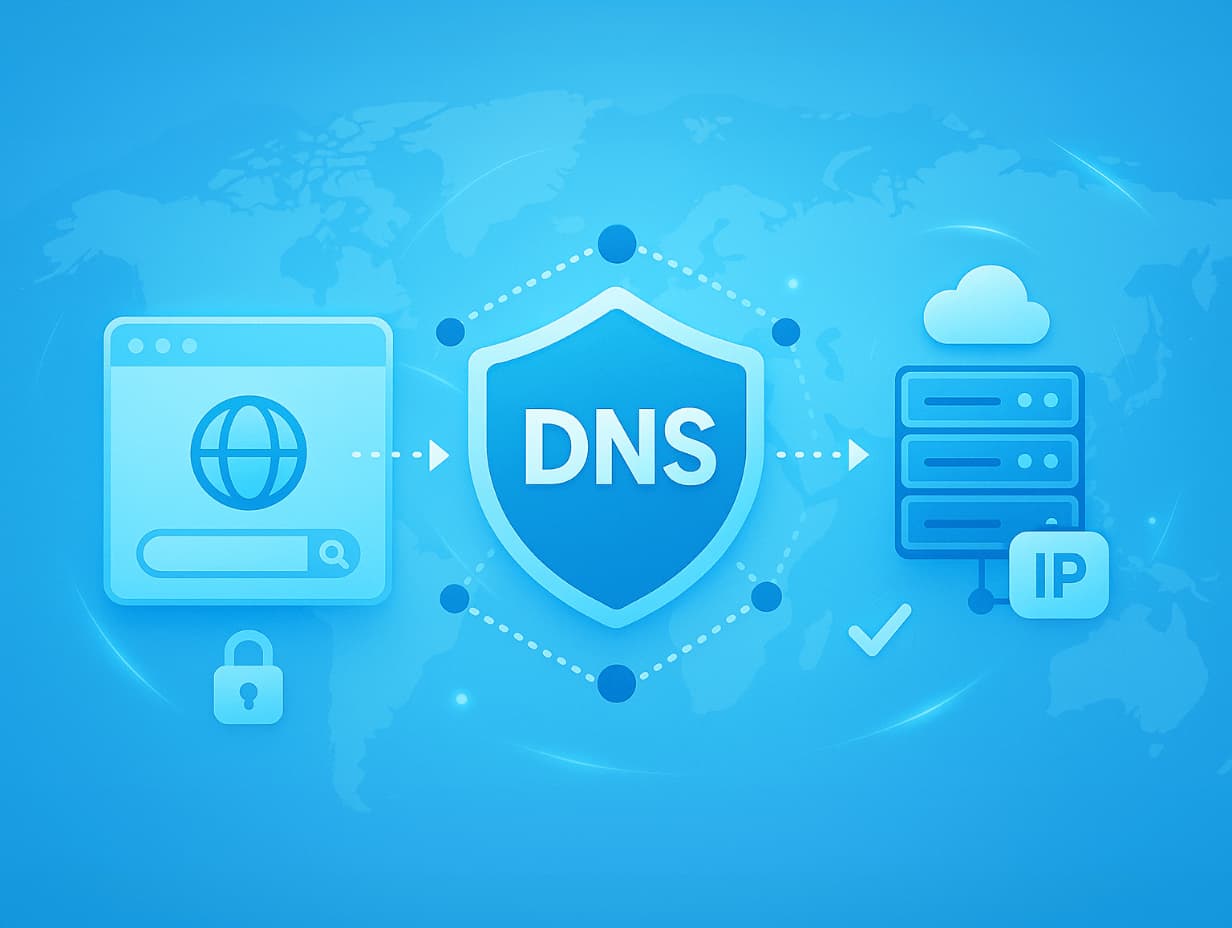
DNS is a hierarchical naming system that maps human-readable domain names (likewww.example.com) into machine-readable IP addresses. When you type a domain name into your browser, the DNS server translates that domain name into the corresponding IP address, and your browser can connect to the server hosting that website. This process involves several layers of DNS servers, starting with the root domain server and gradually querying and resolving subdomains.
How does domain name service validation and root DNS namespace management work? To use an analogy, the entire domain name system is like a “dictionary” or “index”. The root domain name service maintains the top-level domain zones (.com, .org, etc.) and the records of their respective authoritative DNS servers. In other words, this dictionary records “who is authorized to provide DNS resolution services for a particular top-level domain”.
What are the features of Handshake?
Handshake focuses exclusively on top-level domains such as .com, .org, and .net. Internet Corporation for Assigned Names and Numbers (ICANN) has previously vetted and approved these top-level domains. Handshake offers a decentralized solution.
ICANN was founded in 1998 as a non-profit partnership of people around the world to improve the security of the Internet. In other words, it is an organization born to better internationalize the Internet. However, a closer look at history shows that in the early days of the Internet, the IANA (and above, the U.S. Department of Commerce) was the primary regulatory body. With the rapid growth of the Internet, the U.S. Department of Commerce began looking to create a new, more international regulatory body to replace IANA’s functions, and thus ICANN came into being.
Today, 10 of the 13 servers operating around the world are in the United States, and other parts of the world provide network services (ISPs) by mirroring the nearest server. This is relatively centralized and controlled by a specific national government. So if you read Handshake’s white paper and see “peer-to-peer”, you will understand what it is trying to do. Handshake’s main solution is mainly aimed at reducing dependence on ICANN.
However, Handshake does not intend to decentralize the entire DNS. This is because with the exception of the root zone, which is currently centralized, DNS as a whole is already decentralized. It focuses only on data storage and control of the top-level DNS root zone. As his white paper states, “The Handshake naming protocol differs from its predecessors in that it has no notion of a consensus layer namespace or subdomains. It is not intended to replace the entire DNS, but rather the file and root zone servers.” For the long term, Handshake hopes to replace CA (certificate authority).
Handshake and ENS (Ethereum Name Services)
The official ENS documentation says that ENS is an extension and complement to the existing DNS, making it more suitable for resolving blockchain addresses and associating them with usernames. On the other hand, Handshake provides a decentralized solution to replace some existing DNS.
How is Handshake’s security ensured?
Handshake uses the unspent transaction output (UTXO) of the blockchain for security and applies the Proof of Work (PoW) principle similar to Bitcoin. Users can run a full node daemon (hsd) written in JavaScript, which is a fork of bcoinBy running a full node using this program, users can participate in Handshake’s network security defense.
How do I get and access Handshake domains?
Handshake domains are created through online auctions. Any user can bid on any unminted domain using $HNS. The bidding period is about five days. You can bid any amount and choose to add a hidden bid so others cannot know your actual bid. Bid + Hidden Bid = Total Locked Amount. Others can only see the total blocked amount.
If the domain has already been minted, it can be purchased by bidding on the secondary market. Currently, the largest marketplace for Handshake domains is namebase.