Today, trust has become one of the most important resources for e-commerce. It is defined not only by the quality of goods and services offered, but also by how transparently a company operates in the online environment. In the past, a business’s digital identity depended on centralized mechanisms — traditional domains and verification through major providers — but modern trends increasingly point to a shift toward decentralization. This change is particularly evident in the Czech Republic, where small and medium-sized businesses are rapidly expanding their online presence, while customers expect not only convenience but also reliable protection of their personal data.
Blockchain-DNS — Protection Against Censorship and Fraud
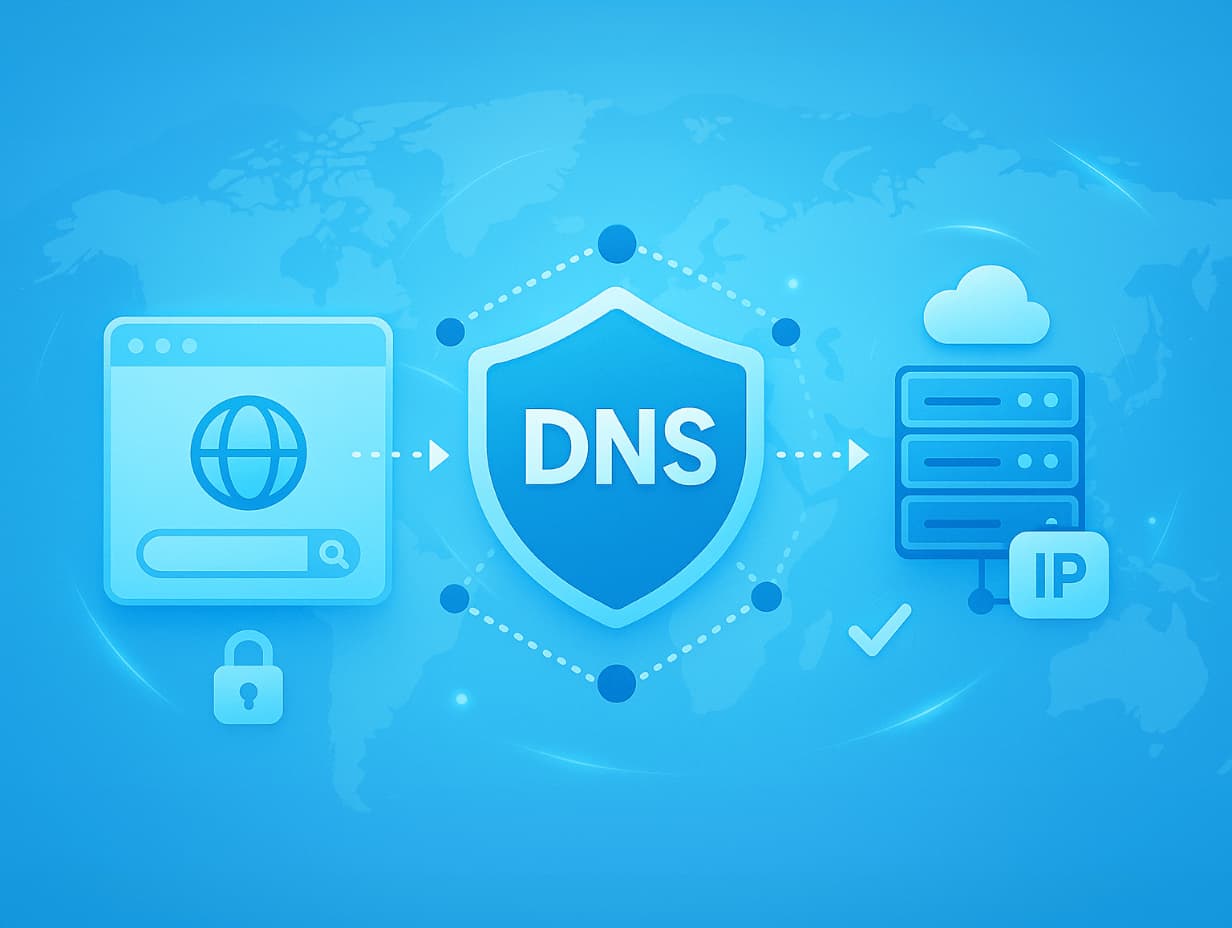
One of the most important tools of the new era is blockchain-DNS. This technology is based on a distributed ledger, where each domain is permanently recorded and cannot be altered without the knowledge of its owner. Such an approach makes domain seizure, censorship, or arbitrary interference by third parties impossible. For Czech companies, this opens up unique opportunities: an online store or digital service built on a decentralized system can be confident that its brand and reputation are technologically protected, while users are guaranteed the authenticity of the site.
The application of blockchain-DNS also has practical value. Phishing attacks and fake websites are a serious threat to e-commerce, especially with the increasing volume of online payments. A decentralized system eliminates this risk: the user immediately sees that they are connecting to a genuine resource recorded in the blockchain. This creates an entirely new level of trust between business and customer, which becomes especially important in a competitive environment.
Privacy and Self-Sovereign Identity
An equally significant trend is data protection. The Czech Republic, as part of the European Union, strictly complies with GDPR requirements, but traditional measures are no longer sufficient. Users expect their information to remain fully under their own control. This is where the concept of Self-Sovereign Identity (SSI) comes to the forefront.
The essence of SSI is that individuals themselves decide which data to provide and to whom. For example, a customer of an online store can confirm their age or the right to purchase a certain product without revealing their full passport or other personal documents. For businesses, this means the ability to build more honest and respectful relationships with customers, strengthen trust, and foster loyalty. In the Czech Republic, where competition between local and international brands is high, this becomes a key factor of success.
Real-World Applications in E-Commerce
Decentralized technologies are also transforming the purchasing process itself. Imagine a Czech online electronics store. Its domain is registered through blockchain-DNS, eliminating the risk of a fake website. A user visiting the page can be sure that they are interacting with the real company. When placing an order, the customer uses a digital wallet, and a smart contract ensures that both sides fulfill their obligations: the money is transferred only after delivery confirmation.
Such mechanisms are also relevant to the online entertainment sector, including popular online casinos, such as those featured on the platform novecasino.net, which presents trusted and reliable casinos with a wide selection of games from leading global providers. Here, trust plays a crucial role: users want to be certain that the platform is transparent, and that their data and winnings are secure. Decentralized identity and blockchain make this possible, which means such models will be actively adopted in the Czech Republic, where interest in online gaming continues to grow.
Prospects for Czech Business
The implementation of decentralized identity provides Czech businesses with several strategic advantages. First, it ensures independence from global providers whose policies may change and restrict market access. Second, it allows companies to form a unique competitive offering based on customer trust. Third, it facilitates integration with the future Web3 economy, where digital currencies and smart contracts will become commonplace.
Already today, interest in these technologies can be observed among startups and innovative companies in Prague and Brno. Many are experimenting with decentralized solutions to protect their brands and enhance transaction transparency. Against the backdrop of growing attention from investors and a government focused on digitalizing the economy, the transition to decentralized identity may become an important catalyst for the entire entrepreneurial sector of the country.
Conclusion — Trust as the Main Capital
The future of e-commerce in the Czech Republic and worldwide will largely be determined by the level of trust between businesses and customers. Decentralized web identity, blockchain-DNS, and self-sovereign identities are forming a new infrastructure where transparency and privacy become the rule rather than the exception.
For companies, this is not just a technological innovation, but a strategic step capable of ensuring sustainable growth and long-term competitive advantage. Those businesses that begin implementing decentralized solutions today will become market leaders tomorrow. In the era of rapid digitalization, trust supported by new technologies is becoming the main capital of e-commerce.