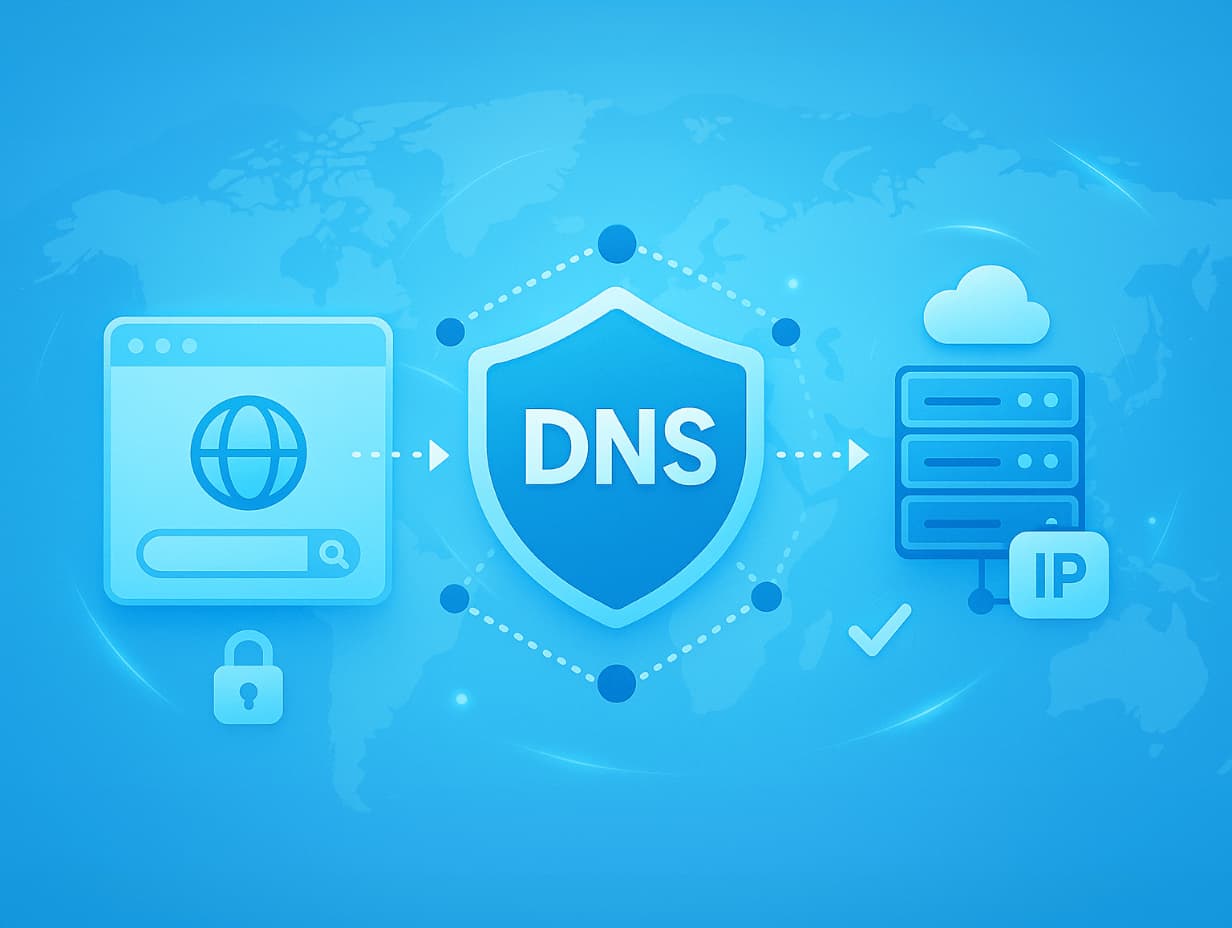
Modern business constantly faces the challenge of trust. Customers want to be sure they are dealing with a real company, while partners seek confirmation of counterparties’ reliability. Until recently, the main tools were centralized authentication systems — government registries, commercial databases, or services from large corporations. Yet, these solutions have their weaknesses: they are vulnerable to cyberattacks, often burdened with bureaucracy, and can limit international cooperation. This is where decentralized identifiers (DIDs) come into play.
A DID is a unique digital identifier that does not belong to any central organization and requires no intermediaries for authentication. It is based on blockchain and distributed ledger technologies, which makes it highly resistant to forgery and manipulation. For businesses, this means the ability to establish secure and trustworthy relationships with clients and partners anywhere in the world quickly and efficiently.
Why DIDs Matter for Business
Traditional methods of verifying identity or company status can be slow and costly. For instance, signing a contract with a new partner often requires checks of legal addresses, bank details, or company history. With DIDs, the process becomes simpler: the data is anchored in a distributed system and secured with cryptography, meaning authenticity can be confirmed instantly.
For customers, this means confidence that an online store or service truly belongs to the stated company. For enterprises, it allows faster deal-making, reduced fraud risk, and cost savings. This is especially important for international trade, where trust is the cornerstone of cooperation.
Adoption in the Czech Republic and Europe
In the Czech Republic, as in the whole of Europe, initiatives around digital identity are gaining momentum. The European Union is pushing forward the eIDAS 2.0 framework, designed to create a unified trust infrastructure across all member states. Within this framework, DIDs are seen as a key element.
For Czech companies, the adoption of decentralized identifiers unlocks significant opportunities. Firstly, it simplifies cross-border trade: businesses in Prague or Brno can establish connections with partners in Germany, France, or Slovakia more quickly, without lengthy verification procedures. Secondly, it strengthens domestic trust: Czech consumers will know their data is secure and that they are interacting with authentic organizations.
Practical Use Cases
Several areas are already showing tangible benefits from DIDs. In e-commerce, they help confirm the authenticity of online shops, reducing fraud risk. In the financial sector, they streamline KYC (know your customer) processes, making them faster and cheaper. In logistics, they enable tracking of product origins and supply chain movements, which is critical for pharmaceuticals and food products.
Take, for example, a Czech brewery exporting beer abroad. With DIDs, it can prove the authenticity of its products, while international partners can verify the reliability of the supplier. This creates a competitive edge in global markets, where counterfeits and fraudulent schemes remain a serious issue.
Challenges and Future Outlook
Despite their advantages, implementing DIDs comes with challenges. Chief among them is the need for unified standards. Different blockchain platforms propose their own solutions, and integration requires international coordination. It is also crucial to address data protection: although the system is decentralized, data storage and transfer must comply with strict GDPR requirements.
Nonetheless, the growth potential is enormous. Each year, digital transformation in the Czech Republic accelerates, and businesses are seeking new ways to strengthen trust. Decentralized identifiers may become the foundation of this new era, helping enterprises operate with greater transparency, security, and competitiveness.
Conclusion
Decentralized identifiers are more than just a technological novelty — they represent a tool capable of reshaping the rules of business and trade. For the Czech Republic and Europe, this is a chance to build a more transparent and trustworthy digital economy, where trust is not a problem but a standard. Companies that are early adopters of DIDs will gain a significant advantage: they will be perceived as more reliable partners, while their clients will enjoy stronger protection. In a world where trust is becoming the most valuable asset, solutions like these are paving the road to the future.